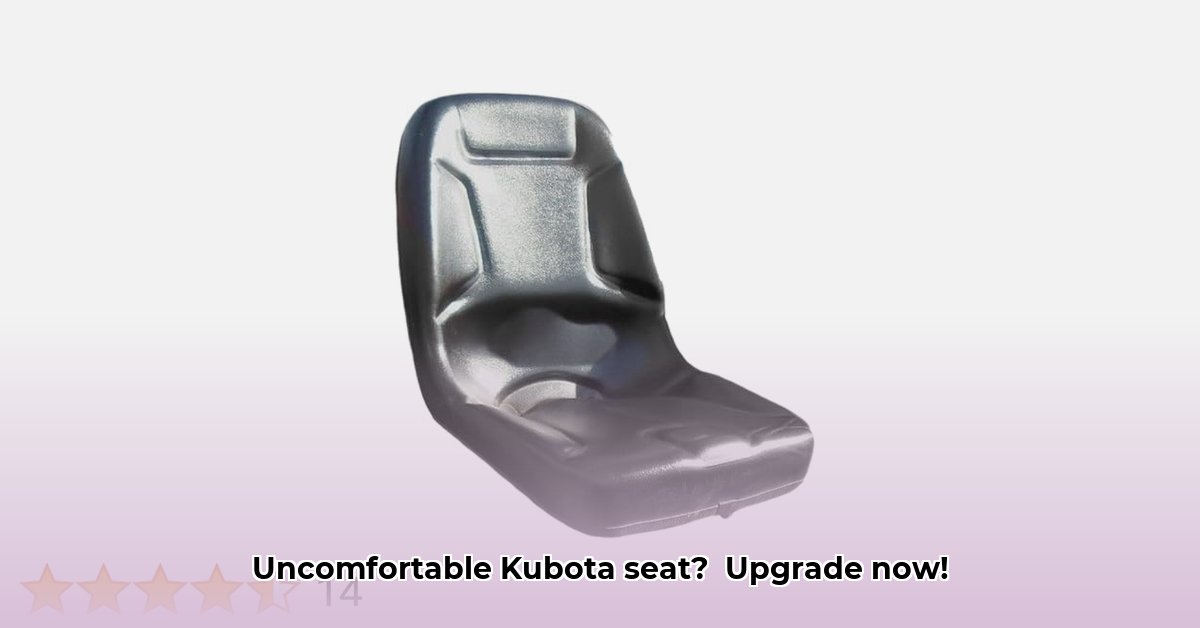
Tired of an aching back after a long day working your Kubota? A new tractor seat can dramatically improve your comfort and productivity. This comprehensive guide will walk you through choosing, installing, and maintaining the perfect replacement seat, regardless of your mechanical experience. We'll cover everything from identifying your tractor model to troubleshooting common installation issues. For additional help with seat springs, check out this helpful resource: spring replacement guide.
1. Identifying Your Kubota Tractor Model and Seat
Before purchasing a replacement seat, accurately identifying your Kubota tractor model and existing seat is crucial. A mismatch can lead to installation problems and even safety hazards.
Finding Your Kubota's Model Number: This alphanumeric code is typically displayed on a sticker located under the hood, on a plate affixed to the tractor's frame, or within the owner's manual. Take a clear photograph of the sticker for easy reference. This number—often a combination of letters and numbers—is essential for ordering the correct replacement parts. Don't skip this step!
Assessing Your Current Seat: Carefully examine your existing seat. Note the following details to aid in selecting a compatible replacement:
- Back Height: Is it high-back or low-back?
- Armrests: Are armrests present? Are they adjustable?
- Suspension Type: Does it have mechanical springs, air suspension, or no suspension?
- Material: Is the seat made of vinyl, cloth, or another material?
- Mounting System: Observe how the seat is attached to the tractor; this will influence the compatibility of a replacement.
2. Understanding Seat Types and Features
Kubota tractor seats vary significantly in features and comfort levels. Understanding these differences will help you choose a seat that meets your needs and budget.
Suspension Systems: Three common types exist:
- Mechanical Suspension (Spring-Based): Offers basic shock absorption, ideal for relatively smooth terrain. It is reliable and cost-effective.
- Air Suspension: Provides superior comfort, particularly on uneven ground, significantly reducing vibration and jarring. This system is generally more expensive.
- No Suspension: These seats offer minimal cushioning and are suitable only for short periods of operation on very smooth surfaces.
Armrests: Armrests provide support, reducing fatigue during prolonged operation. Some are adjustable, while others are fixed. Consider whether adjustable armrests are a desirable feature for you.
Seat Materials: Common materials include:
- Vinyl: Durable, easy to clean, and resistant to wear. However, it can become hot in warm weather.
- Cloth: More breathable than vinyl, often providing better comfort in hot climates. It may require more frequent cleaning.
- Premium Materials: Some high-end seats utilize leather or specialized fabrics for enhanced comfort and durability.
3. Choosing a Replacement Seat: OEM vs. Aftermarket
The decision hinges on your budget and priorities.
Original Equipment Manufacturer (OEM) Seats: These are made by Kubota and guarantee a perfect fit and compatibility. They typically come with a warranty and often incorporate design elements optimized for your specific Kubota model. However, OEM seats are typically the most expensive option.
Aftermarket Seats: These are produced by third-party manufacturers. While often more affordable, they may require some modifications for a perfect fit and might not offer the same warranty coverage as OEM options. Reputable aftermarket brands ensure quality comparable with the OEMs. Always check customer reviews before purchasing an aftermarket seat. Amazon and other online marketplaces offer various options; verifying compatibility with your Kubota model is critical.
4. Step-by-Step Installation Guide
Disclaimer: Always disconnect the tractor's battery before beginning any repair or installation work.
Step 1: Preparation: Gather necessary tools (refer to your tractor's manual and the seat's instructions for a complete list). This typically includes sockets, wrenches, and possibly screwdrivers.
Step 2: Removing the Old Seat: Carefully disconnect any electrical connections (seat heaters if present) and remove fasteners securing the seat to the tractor's frame. Take photos to aid in reassembly.
Step 3: Installing the New Seat: Align the new seat with the mounting brackets on the tractor. Secure it using the correct hardware, ensuring that all bolts and screws are tightened securely. Refer to the installation instructions for specific details.
Step 4: Testing: Reconnect the battery. Test all seat functions (adjustments, heaters if applicable) to verify correct installation and operation.
5. Troubleshooting and Maintenance
Common Issues: If installation proves difficult, review your steps and check for compatibility issues. Ensure that all components are correctly aligned and secured.
Regular Maintenance: Keep your seat clean using appropriate cleaning agents (check the manufacturer’s recommendations). Inspect the seat's moving parts (adjustments, suspension components) periodically, and lubricate if needed. Addressing small problems promptly prevents larger, more costly repairs.
6. Resources and Links
- Kubota Dealerships: Your local dealer is the best source for OEM parts and expert advice.
- Online Retailers: Check Amazon, eBay, and other online marketplaces, comparing prices and features before buying.
- Specialty Tractor Parts Suppliers: These suppliers often specialize in aftermarket parts and can offer a wider range of options.
Investing in a comfortable and supportive Kubota tractor seat enhances operator comfort, reduces fatigue, and increases efficiency. By following this guide, you can significantly improve your work experience and protect your health.